
The 3 Housing Questions You'll Hear at Thanksgiving Dinner
Market Talk · Union County, NJ
Somewhere between the turkey and the pie, it happens every year. Your uncle announces that home prices are about to crash. Your cousin swears foreclosures are surging. And someone down the table says the word "recession" — and suddenly everyone's looking at you, the one who works in real estate.
This Thanksgiving, you'll have the data. Here are the three housing questions that come up at just about every family dinner, what the numbers actually say, and how to answer each one calmly — no crystal ball required.
1. "Are Home Prices Going To Crash?"
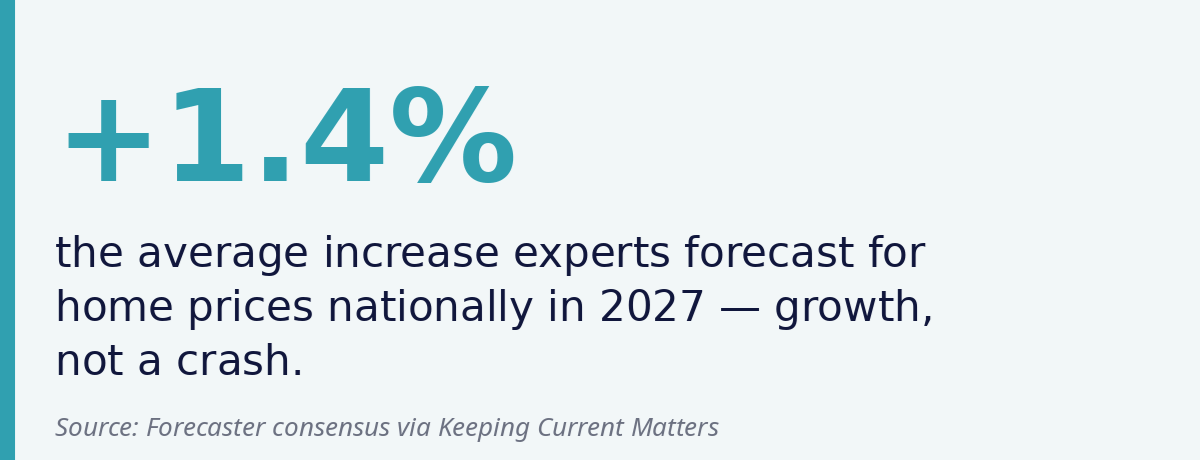
Let's start with your uncle's crash prediction. The short answer: no. Experts project home prices will keep climbing nationally in 2027 — on average, forecasters expect prices to rise about 1.4% next year. That's slower growth, not a collapse.
Yes, prices are dipping in some markets — but look at where. As Lawrence Yun, Chief Economist at the National Association of Realtors (NAR), explains:
"Price declines are occurring mainly in southern states, where there has been robust new home construction in recent years. Given the region's faster job growth, these price drops should be viewed as temporary and as a second-chance opportunity for those previously priced out of the market."
And here in Union County? Our October numbers tell an even steadier story: the median sale price was $680,000 — up 7.9% from last year — homes sold for 102.7% of their asking price, and we had just a 2.9-month supply of homes for sale. That's not what a crash looks like. That's a market with more buyers than homes.
2. "Is This 2008 All Over Again?"
Next up, your cousin and the foreclosure headlines. Foreclosures have ticked up lately — but context matters. That increase is measured against very low levels, and foreclosure activity is still below where it was before the pandemic, according to ATTOM.
So why doesn't today look like 2008? Logan Mohtashami, Lead Analyst at HousingWire, puts it plainly:
"We have had many recessions post-WWII but only one foreclosure crisis. That foreclosure crisis started with a massive credit boom from 2002–2005, and then a credit bust… none of that is happening now."
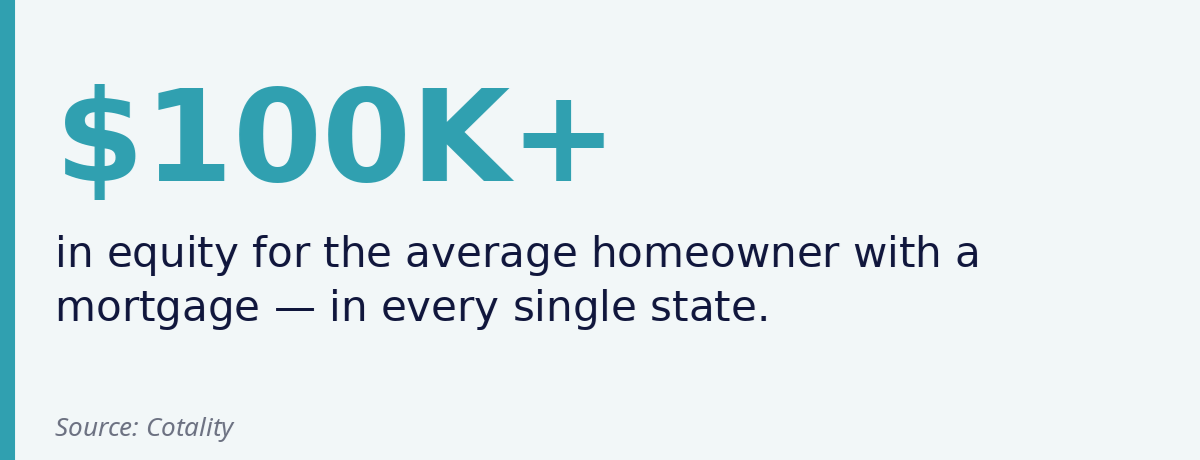
Today's homeowners also have a cushion a lot of people didn't have back then: equity. In every state, the average homeowner with a mortgage has more than $100,000 of it, according to Cotality. That matters, because a homeowner who hits a rough patch can usually sell their house and walk away whole — instead of facing foreclosure.
3. "Are We Headed for a Recession?"
Finally, the recession question. While someone at your table may be convinced one is coming, the experts don't agree. The average forecast from The Wall Street Journal's survey of economists puts the odds of a recession at about 24% — meaning most economists aren't expecting one at all.
But here's the part that surprises people: even if a recession does hit, home prices don't automatically fall. In 5 of the last 6 recessions, prices actually went up, according to the Federal Housing Finance Agency (FHFA). The one exception was 2008 — the only one of those recessions that started in the housing market itself.
Bottom Line
So the next time your uncle predicts a crash or your cousin brings up 2008, you'll know: prices aren't crashing, foreclosures are still low, and a recession doesn't automatically spell trouble for housing. The headlines are scarier than the data.
Know someone who'll hear these questions at their table this week? Send them this post. And if a move in 2027 is on your mind, talk to me — we'll look at what prices are actually doing in your neighborhood, so you can plan with real local numbers, not scary headlines. Happy Thanksgiving to you and your family.
Thinking about a move in 2027?
Let's look at your neighborhood's real numbers — no pressure, just a plan.
Jorge E. Casalins
Broker Associate · Real Broker LLC · Casalins Real Estate
Cell: 908-220-7151 · Jorge@JorgeCasalins.com · JorgeCasalins.com
Your Real Estate Partner. · NJ Realtors® Circle of Excellence Recipient, 2016–2025
Recent Posts





GET MORE INFORMATION
